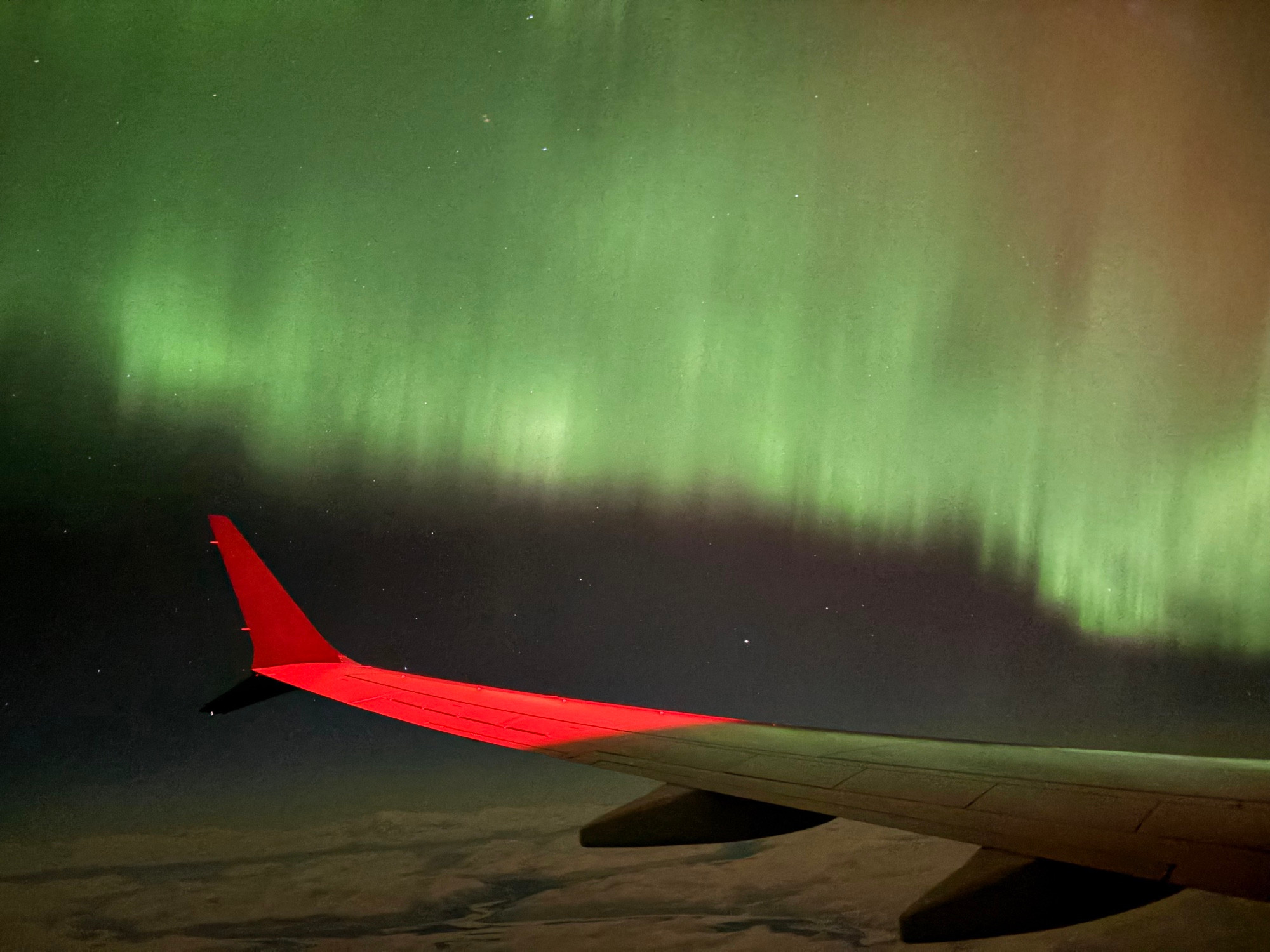
So, keeping up with my one-blog-article-a-year policy, here's a wrapup of what my 2025 was like. I usually write these wrapups on New Year's Eve, but last year I was flying back from Alaska and got an amazing show from the aurora borealis on the way so I didn't get around to writing a 2024 edition. In 2024 I did write an article about identifying the interviewer in the primary sample of Little Fluffy Clouds, so that counts, right?
Celebrating #MARCHintosh
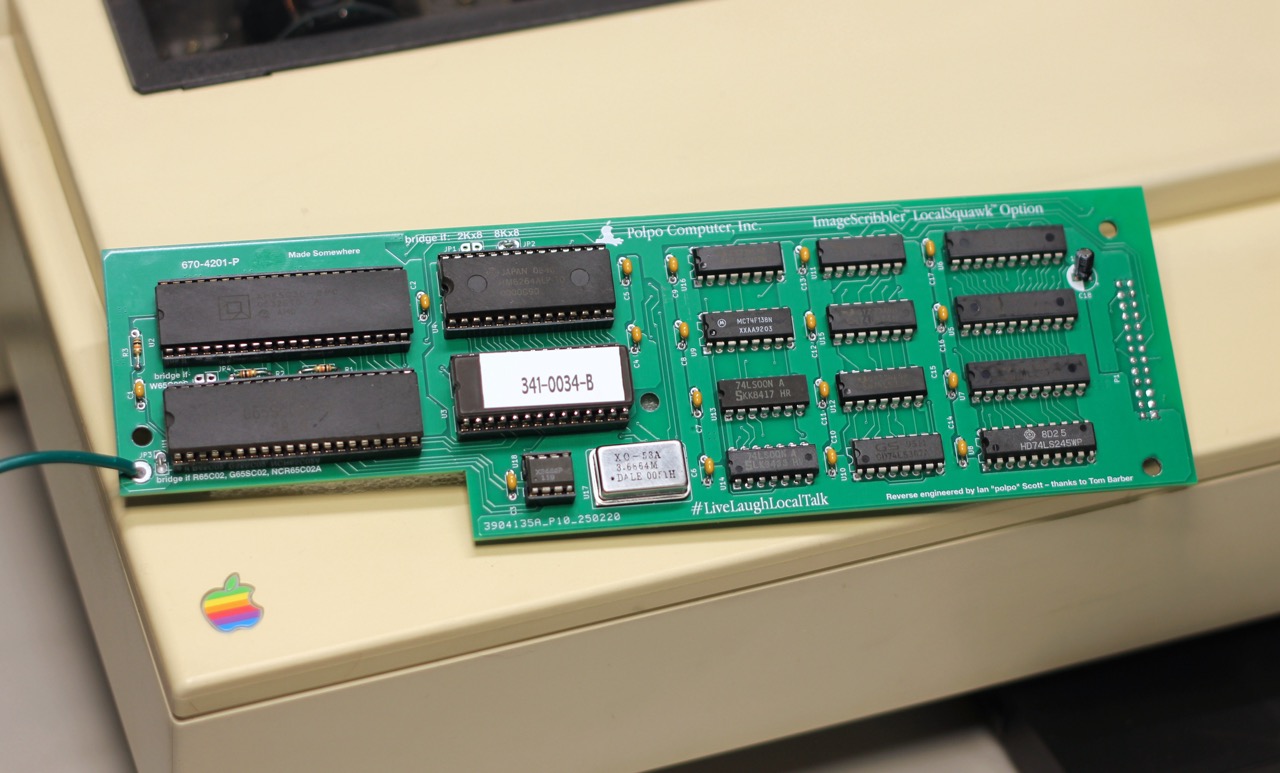
MARCHintosh is a celebration of all things Macintosh that takes place during (when else) March and a big thing people participate in is GlobalTalk where many people get on a world-wide AppleTalk network. On GlobalTalk, people share files, play games, and print fun things to each other's printers. And the most fun printers of all are dot matrix printers, especially the Apple ImageWriter II! The ImageWriter II requires a special card inside it to get on an AppleTalk/LocalTalk network, the LocalTalk Option Card, which has become quite rare over the years. I had the printer that I got off the free pile at VCF Midwest but didn't have the LocalTalk Option Card. After taking a look at one, I realized it'd probably be pretty straightforward to reverse engineer. Tom Barber let me borrow his card and desolder all of the chips from it so I could scan it and reverse engineer it in KiCad. I named it the ImageScribbler LocalSquawk Option card. If you want one, you can get one at JCM-1.com!

Continuing PicoGUS
Something I've wanted to do for quite some time was give a talk at a Vintage Computer Festival event. In 2024 I was part of a panel discussion at VCF Midwest with some extremely talented hardware creators and it gave me the idea to give a talk about the development of PicoGUS. Last year I wrote an article in Make Magazine about developing PicoGUS so I had a really good idea of what kind of story I wanted to tell, so I applied to give a talk at VCF East and was accepted! Come April, I flew to New Jersey and got to give the talk. I was kind of nervous at the start but soon got into a groove and I thought the talk went really well! The big themes of the talk were how making incremental progress kept me motivated, and how being open source allowed the project to go in some amazing directions.

Speaking of open source, despite being "done" for a couple years, I still kept working on PicoGUS. A while ago, Kevin Moonlight, a friend and frequent collaborator on retro projects with the Pico, reverse engineered the Panasonic/MKE CD-ROM drive interface to emulate it on his Pico PCMCIA project and he was gracious enough to let me use his code on PicoGUS. This meant that the project was able to add yet another ability: optical drive emulation!
Onto the next thing...
Once I got experience integrating CD-ROM support into PicoGUS and writing disc image handling code, a question I've asked myself came back into my head: could I make an IDE drive emulator? IDE is somewhat close to ISA, which I know quite well after creating PicoGUS. And the RP2350 is probably fast enough to handle IDE bus transactions. After doing some back-of-the-napkin math and knowing I had about 30 clock cycles to respond to IDE register writes/reads, it definitely seemed possible. I dove in and got a proof of concept working pretty quickly.
Even though there are other IDE emulators out there, I set out to create what I wanted to use: fully open source, affordable, and with a really nice front panel and WiFi control. So PicoIDE was born (yes, kind of boring name, but it follows from the PicoGUS name, and my contact at Raspberry Pi OKed the name)!
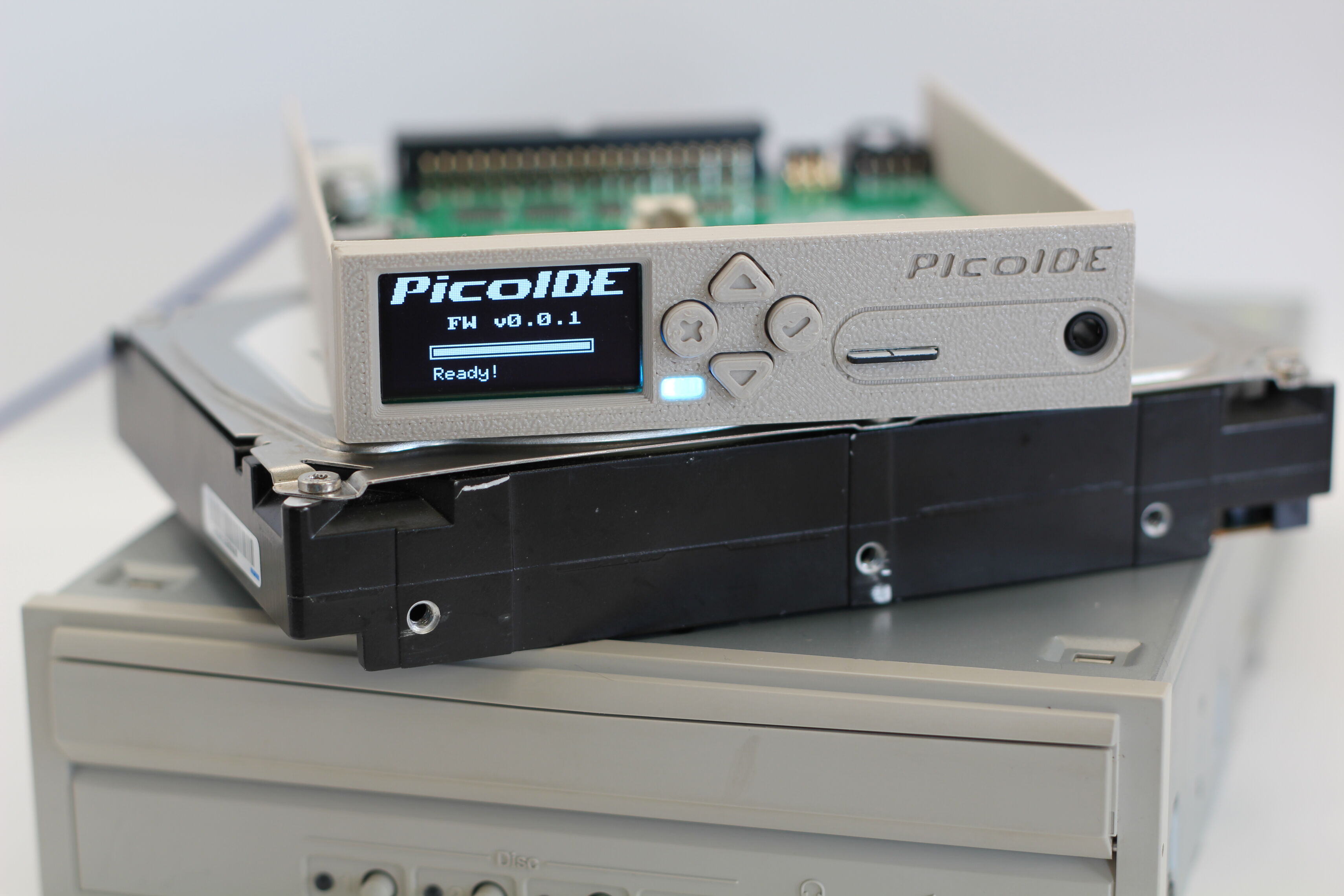
I wanted to get it fully done and launched before the end of the year, but real life gets in the way and I couldn't quite get it ready in time. However it's in pre-launch at Crowd Supply, a crowdfunding platform with a focus on makers and open source hardware. Sign up there to be notified when it actually launches!
Happy 2026!
Here's to a happy and healthy 2026 to all of you. 2025 was definitely rough for a lot of people and I'm really hoping it's better for everybody.